
Root canal treatment.
A tooth can hurt when the soft tissue inside it, called the pulp, becomes inflamed or infected. A root canal treats that tissue so your natural tooth can stay in place. We start by finding the cause of the pain and checking whether the tooth can be restored.
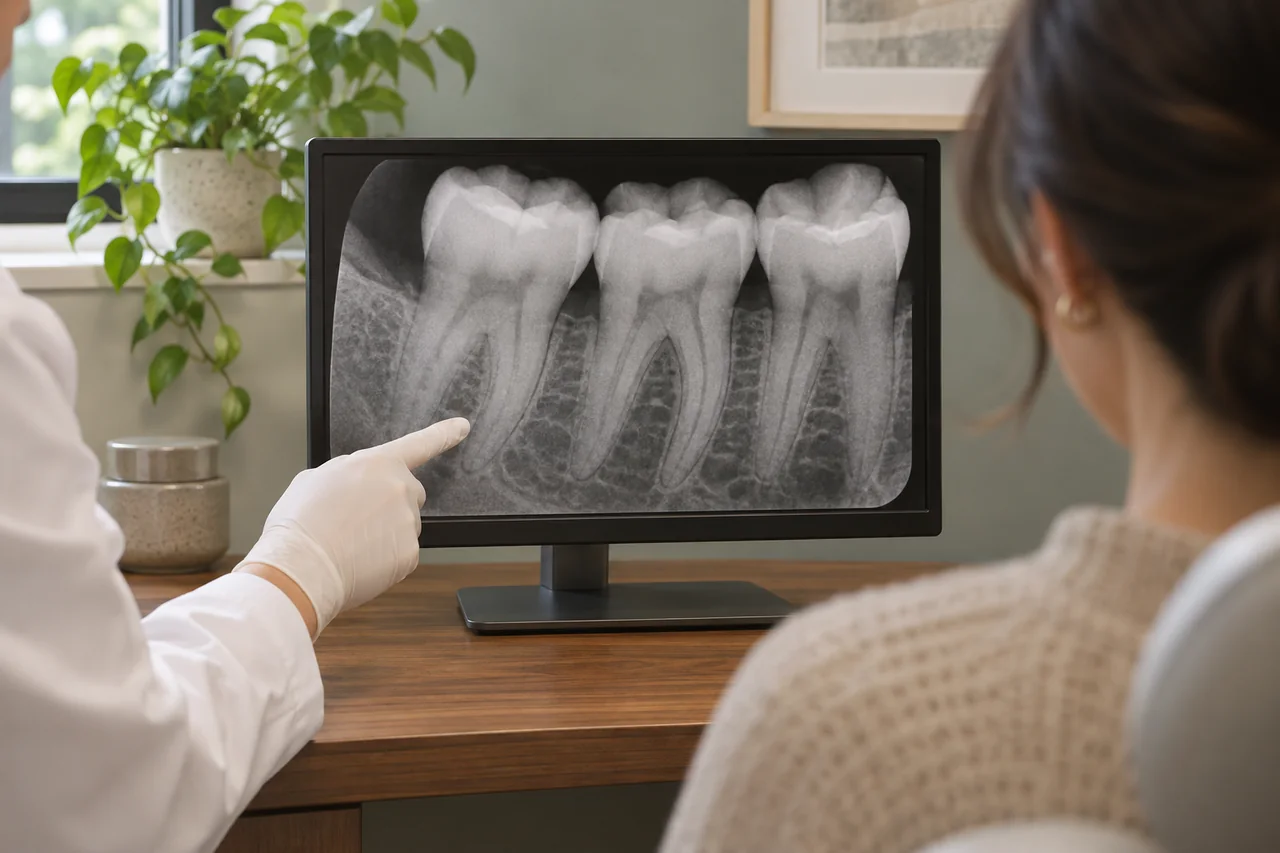
Saving a natural tooth
Pain when biting and sensitivity that lingers after hot or cold foods are worth mentioning. Your dentist will ask what you’ve noticed and when it started.
- Find the tooth causing the pain
- We examine the tooth, test its response, and take X-rays as needed. Your dentist will explain what the findings mean and whether a root canal gives the tooth a good chance of being saved.
- Clean and seal the canals
- After numbing the area, your dentist removes the inflamed or infected tissue, cleans the narrow spaces inside the roots, and fills and seals them. The number of visits depends on the tooth.
- Protect the tooth for chewing
- A permanent filling or crown restores the top of the tooth. We’ll explain which restoration it needs and when to return, so you know how to protect it while you finish treatment.
Questions about root canals
Who will treat my tooth?
Most of our general dentists can treat complex root canals. Our group also has endodontists, who specialize in saving teeth. We match you with the right clinician for the shape of the roots, previous treatment, and the condition of the tooth.
When might I need a specialist or surgery?
A hard-to-reach canal or a tooth that has already had a root canal may benefit from an endodontist’s evaluation. If infection persists around a root tip, our endodontists and surgeons can help you decide whether retreatment or surgery gives the tooth the best chance of healing.
Will I need a crown afterward?
Back teeth take more chewing force and often need a crown after a root canal. For some front teeth, a filling is sufficient. Your dentist will consider how much healthy tooth remains and how your teeth meet.
YOUR NEXT CHAPTER
A healthier smile.
A warmer welcome.
Find your neighborhood practice.
We look forward to getting to know you.